Bus running days explained: ride a 1950s bus for free
On a couple of dozen Saturdays a year, a seventy year old bus with its blind wound to a place it last served in 1962 pulls up at an ordinary bus stop, and anyone standing there can get on. Usually for nothing. That is a running day, and pound for pound it is the best value day out in British transport preservation.
Almost nobody explains them properly. Museums sell tickets and put up signs; running days publish a timetable on a Facebook page three weeks before and assume you already know the drill. This guide covers what actually happens, how to build a day around one, what to do with children on an open platform, and which events are worth travelling for.
What a running day actually is
A running day is a bus service, not a display. A preservation group puts its vehicles on a published timetable, sends them out over routes those buses used to work, and carries whoever turns up. The blinds show the old route numbers. The stops are normal stops. You stand at the kerb, put your hand out, and a 1958 half cab pulls in.
That is what separates it from a museum ride round a field. The bus is out in traffic, climbing the hills it was geared for, stopping where it always stopped. Classic Buses in Chesham on 27 September 2026, run by the Amersham and District Motorbus Society, brings former London Transport and London Country buses, mainly Country Area green with the occasional red, back onto the roads and lanes of south Buckinghamshire on timetabled services over original routes. Which types turn out varies year to year and is only confirmed in the souvenir programme, on sale from mid September, so go for the day rather than for one particular bus. Kingsbridge Vintage Bus Day on 19 September runs narrow 7ft 6in buses through the South Hams lanes, which is exactly why those buses were narrow.
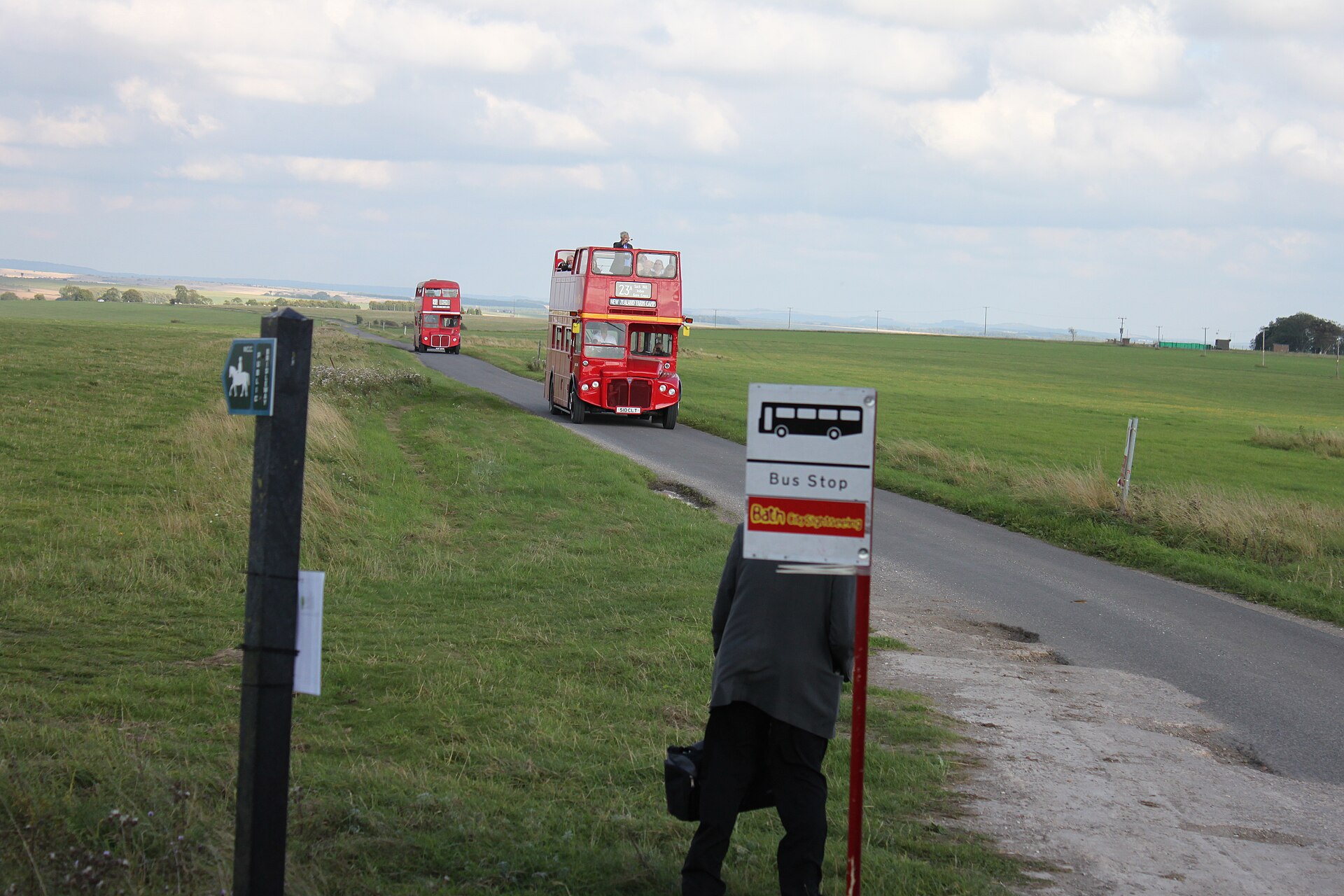
Most of it is free. Chesham is free with no booking, and Kingsbridge runs free from 10.00 to 17.00. Some events are free to ride but not free to get in: Dewsbury Bus Museum's Autumn Running Day, Sunday 1 November 2026 from 11.00 to 16.00 at Ravensthorpe, advertises free and frequent bus rides in and around the local area but charges admission to the museum, most recently £5 a head with accompanied children free. The 2026 price was not published when we checked. Where there is a fare it is small and usually for charity: Imberbus, the mid August run of Routemasters from Warminster station across the Salisbury Plain ranges to the abandoned village of Imber, charged £10 adult and £2 child in 2026. Free travel is partly goodwill, partly paperwork: not taking fares keeps the day clear of commercial licensing. So the crew hand you a timetable and leave a bucket by the platform.
How to plan a day around one
Timetables go out in advance, usually as a PDF on the group's website or Facebook page two to four weeks ahead. Read it the night before; the day works far better with a plan than with you squinting at a leaflet in a bus station.
Nearly every running day has a hub: Skipton bus station for the Yorkshire Dales Running Day on 11 October 2026, St Catherine's Park and Ride for the King Alfred Autumn Country Bus Day at Winchester on Sunday 13 September, James Street for the Merseyside Transport Trust's day in Liverpool on the same date, buses out between 10.30 and 16.30. Base yourself there.
- Park at the hub, not at the far end of a route. You want the car where the buses come back to.
- Ride out on one route and back on another. That doubles the number of vehicles you get.
- Build lunch round a layover. Most rural routes sit 20 to 40 minutes at the outer end, usually near a pub.
- Take cash. Buckets, raffles, programmes and sales stands do not take cards.
- Be there for the first departures. The good vehicles go out early and crowds build after 11.
- Treat the timetable as intent, not contract. A 60 year old gearbox occasionally has views, and the running board gets covered by something else.
The winter gap: what happened to Ensignbus
For years the December fixture was Ensignbus. The bus and coach operator and dealer at Purfleet put its heritage fleet out on timetabled routes around Thurrock and south Essex from Lakeside bus station, a fleet spanning the 1930s to the 2000s including London RTs and Routemasters. It was not free in its later years. The last one, on 2 December 2023, ran on a £10 adult day ticket with a £2 child ticket for ages 5 to 15, valid on the running day routes X21, X54, X55 and X81.
It has gone, and any guide still listing it is out of date. Ensignbus was sold to FirstGroup in March 2023, its last independent day being 9 March 2023, and the vintage fleet was excluded from the sale and kept by the Newman family. The running day routes were deregistered in September 2024 and no running day has been held since. The buses are still there to see, but as a static collection: they now form the Zero2 Bus Museum at Great Yeldham in Essex, which opened to the public in December 2025 and runs weekends and bank holidays from 3 April to 25 October 2026, with occasional heritage trips branded Great Yeldham Buses. That season closes before the winter, so it is not a substitute for the old December day out.
Which leaves a gap where a national December fixture used to be, and we are not going to invent something to fill it. Two things are worth knowing instead. The Thames Valley and Great Western Omnibus Trust is bringing Bristol VRs back to Penzance bus station on Saturday 5 December 2026, with the Cornwall Bus Preservation Society, marking twenty years since the type was withdrawn from its last Cornish base. It is a one-off rather than an annual fixture; the trust's regular Penzance running day is an April event. And a handful of museums run twilight events at the dark end of the year, which is the other way to get a heritage bus in winter. Check the organisers' own pages before travelling, since these are single dates rather than standing fixtures.
Rallies, running days and museum days are three different things
People use the words interchangeably and then turn up to the wrong sort of event. The distinction is simple and it decides how your day feels.
- Running day: buses out on public roads to a timetable, no gate, no admission. Chesham, Kingsbridge, Skipton, and the Devon General revival at Newton Abbot on 6 September 2026, with free services to Teignmouth, Torquay and Chudleigh plus an open top town tour.
- Rally: a field or a closed street full of parked buses, with stalls, food and usually free feeder services bringing you in. Lyndhurst Bus Rally at Boldre on 22 August 2026 runs S1, S2, S3 and X5 feeder services through the New Forest, with fares not published; Bridgeton Bus Fest at Glasgow's Fordneuk Street garage on 3 and 4 October is the Scottish equivalent.
- Museum running day: a fixed site with admission, rides included. Transport Museum Wythall's Twilight Running Day on 25 October is open until 6pm with last bus rides at 5.30pm, at £12 adult, £6 child. Dewsbury Bus Museum's Autumn Running Day on 1 November is the hybrid: free rides out on the road, paid admission at the museum. The East Anglia Transport Museum's Festival of Transport on 26 and 27 September is the only place you can ride a bus, a tram and a trolleybus on one site, Saturday running to 9pm.
Taking kids: they ride up top at the front
The front seat upstairs is the entire point of a heritage double decker, and children work that out in about four seconds. Board at the terminus rather than mid route and you will usually get it. On a half cab the driver sits sealed off in his own cab, so from up there you get the road, the engine roaring at 30mph and nothing in the way.
Old buses are less forgiving than modern ones, so a little preparation saves the day.
- Stairs are steep and turn tight, with a handrail set for adults. Go down in front of a small child, not behind them.
- Open platform buses have no doors at the back. Stay seated while moving and hold the pole when you get up, yourself included, because children copy what you do rather than what the conductor says.
- Pushchairs get no bay. Fold it under the stairs, or bring a sling and leave the buggy in the car.
- No seatbelts, and the heaters are largely decorative. Layers in September, proper coats for the twilight events.
- Two rides and chips beats seven rides. Toilets are wherever you happen to be, another argument for the hub.
- Children are usually free or nearly so. Imberbus at £2 is about as dear as it gets, and museum sites that charge admission normally let accompanied children in free.
Conductors, buckets and the unwritten rules
Crew operated buses have a conductor. Tell them where you are going and keep the ticket, which is the best free souvenir your kids will get all year. The old London bell code still runs the bus: one bell to stop, two to go, three when it is full. Ask before letting a child ring it.
Put a note in the bucket rather than shrapnel. These things do single figures to the gallon, insurance is not cheap, and the day only exists because somebody spent a decade rebuilding a bus in a shed.
The photographers are half the crowd. When a bus swings onto the stand, several want a clean shot before it fills. Give it ten seconds and everybody gets what they want, though nobody has the right to stop you boarding. Why they are so intent is worth knowing: some of these buses are the last of their type running, and that vehicle, on that route, with that blind, exists for one day and then goes back in the shed.
The other rule nobody writes down: talk to the owners. Ask what it is, where it worked, how long the restoration took. Better answer than any museum board, and it costs nothing.
Finding one near you
The season runs roughly March to November and most weekends have one somewhere. Autumn is busiest, because Heritage Open Days pull several of the big ones into September. December is now thin, for the reasons above.
Worth diarising: Scottish Vintage Bus Museum's open weekend at Lathalmond on 22 and 23 August, with a free vintage service from Dunfermline bus station; the Cardiff Transport Preservation Group's twilight run from Barry depot on 7 November; and Buses by Twilight at the Museum of Transport Greater Manchester on 14 November. The Friends of King Alfred Buses at Winchester are worth following too, though their calendar is not what it was: the decades old New Year's Day running day is now a smaller free service from The Broadway on 1 January, with the main event moved to the first Bank Holiday in May. Neither of next year's dates was confirmed when we checked.
One warning. Dates move, small events get pulled and long standing ones stop altogether: the 2026 Alton Bus Rally and Running Day was cancelled outright. Check the organiser's page the week before you travel. Our directory is checked weekly, searchable by postcode, and the Thursday email lists what is running that weekend.
Quick answers
Are bus running days really free?
Most are. Classic Buses in Chesham, Kingsbridge Vintage Bus Day and the Merseyside Transport Trust day in Liverpool all carry passengers for nothing, with a donation bucket by the platform. A few charge a small fare for charity, such as Imberbus at £10 adult and £2 child in 2026. Museum based running days charge normal admission with rides included, like Wythall at £12 adult and £6 child. Dewsbury Bus Museum is the middle case: the rides are free, the museum is not.
Do I need to book?
Almost never. Running days are turn up and ride, first come first served, and Chesham states plainly that no booking is required. The exceptions are museum events with timed entry and the occasional charity special, so check the organiser's page if there is a gate involved.
What is the difference between a bus rally and a running day?
A rally is a gathering of parked buses on a field or a closed street, with stalls and food, usually with free feeder buses running visitors in. A running day is a timetabled service out on the public road with no display and no gate. Plenty of events are both, and museum open days are a third category with an admission charge.
Can I take a pushchair on a preserved bus?
Yes, but there is no buggy bay and no ramp. You fold it and put it under the stairs, and you lift it up two steep steps to get aboard. With a baby or toddler a sling is far easier, and it also frees you up to get upstairs, which is where they want to be anyway.
Are open platform buses safe with children?
They are used every year by thousands of families, with the same common sense you would apply anywhere: stay seated while the bus is moving, hold the pole if you get up, keep a hand on small children near the platform, and take the stairs one at a time going down. The conductor sets the rules on board and will say so if anything is not on.
Is the Ensignbus December running day still going?
No. The last one ran on 2 December 2023, and it was ticketed by then at £10 adult and £2 child rather than free. Ensignbus was sold to FirstGroup in March 2023, the vintage fleet stayed with the Newman family, and the running day routes X21, X54, X55 and X81 were deregistered in September 2024. The heritage fleet is now a static collection at the Zero2 Bus Museum at Great Yeldham in Essex, open weekends and bank holidays from 3 April to 25 October 2026. There is no announced replacement December running day, so ignore any listing that still gives one a date.