Seeing tanks run: TANKFEST and military vehicle shows
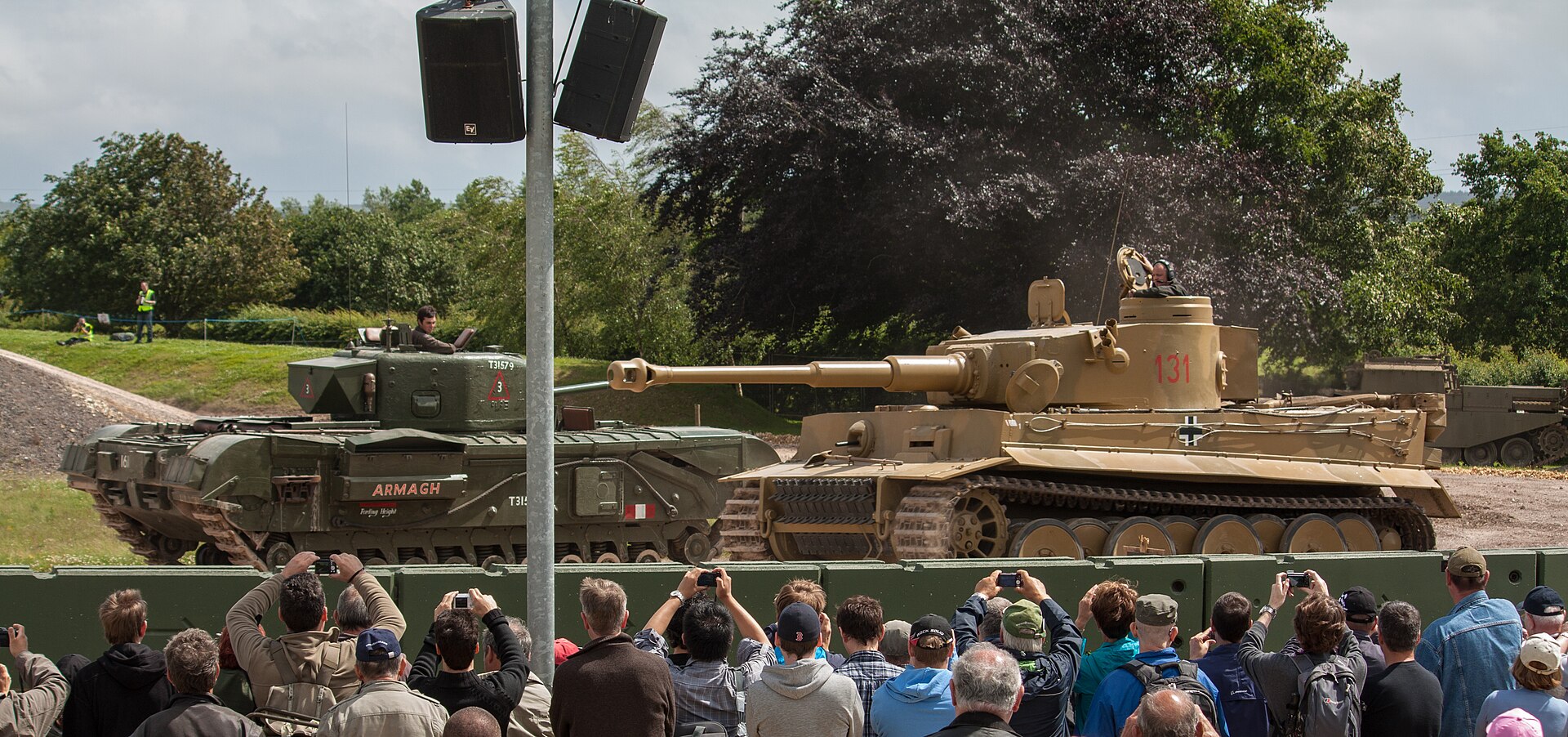
A tank sitting on a plinth is an interesting object. A tank forty feet away, coming across a dirt arena at 25mph with the ground going through your feet and hot diesel in the air, is something else entirely. That gap is why military vehicle shows exist, and why people book a year ahead for the good ones.
The UK is unusually good at this. We have the world's best tank museum, a private preservation scene that keeps thousands of jeeps, trucks, half-tracks and armoured cars on the road, and a summer calendar of shows where all of it runs. Here is what actually happens at one, which events are worth the drive, and the practical stuff nobody tells you until you are already stood in a wet field.
What actually happens on the day
Most military vehicle shows are built the same way, from a village green affair with thirty vehicles up to a multi-day event with thousands. There is a vehicle line where owners park up and stand about answering questions, a living history area of tented camps, an arena, and a row of traders selling everything from ammo tins to entire deactivated machine guns.
The arena is the bit that sells tickets. Vehicles run in convoy, the commentator tells you what you are looking at, and at the bigger shows there is a scripted battle with pyrotechnics and blank fire. At Bovington the arena display is genuinely world class and runs to a packed timetable, roughly a dozen separate displays across the day with a break in the middle for lunch. At a local show it might be six jeeps and a Ferret doing laps, which is still a good afternoon.
The camps are the underrated part. Re-enactor groups build a working field kitchen, a signals tent and a medical station, and they will talk to you for half an hour about ration packs if you show the slightest interest.
- Vehicle lines: owners are usually happy to let you look inside if you ask
- Living history camps: hands-on kit, food being cooked, radios that work
- Arena displays: near-continuous at Bovington, while smaller shows tend to build around one or two set-piece battles plus rolling parades, so read the published programme rather than assuming a pattern
- Traders and autojumble: militaria, spares, surplus, model kits
- Rides: jeeps, trucks and occasionally something tracked, a few pounds a go
TANKFEST at Bovington, and why booking is the hard part
TANKFEST is the one. It runs over three days in late June at The Tank Museum, Bovington in Dorset (BH20 6JG), and the museum calls it the largest display of moving armour anywhere in the world. That is not a claim that gets challenged much. The 2027 event is Friday 25 to Sunday 27 June. You will see Second World War armour, Cold War heavy metal such as Chieftain, Challenger 1, Leopard 1 and T-72, current British Army vehicles, and guest vehicles brought in for the weekend. Those guests are not reliably foreign, whatever the write-ups suggest; the 2026 line-up included a StuG III from a private UK collection.
Two things worth knocking on the head before you book. The museum's Conqueror is not a runner. It is mid-restoration under a public appeal and the museum expects the work to be finished in time for TANKFEST 2028, so do not turn up expecting to see it move before then. And Tiger 131, the world's only running Tiger I, is not a fixed part of the TANKFEST programme. The museum normally keeps its running to the two dedicated Tiger Day events to preserve an eighty year old machine, and it appears at TANKFEST only when it is specially billed for that year. The Vehicle Conservation Centre is open across the weekend, so you can walk the workshop side and see what a Panther looks like with its engine deck off.
Getting in is the hard part, though not in the way most guides describe. Tickets go on general sale roughly a year ahead, straight after the previous TANKFEST, rather than the winter before. Tickets and full pricing for 2027 have been on general sale since the summer of 2026. There is no general members' presale to hold out for either. Tank Museum Friends get 15 per cent off special event tickets plus early access to premium tickets and experiences, and Gold Friends have TANKFEST and Tiger Day tickets included in the membership itself. Saturday sells out first. Friday is quieter, the arena programme is much the same, and it is the day to pick if you have the choice.
Published 2027 prices are £44.95 for an adult single day ticket (16 and over), £9.50 for a child aged 3 to 15, £1 for under-3s, and free for carers. Car parking is free and there is no separate parking booking to make; premium parking exists only bundled inside the hospitality packages, at £125 per person per day for TANKFEST Unlimited and £155 for Unlimited Plus. Tickets are not sold on the door, so a speculative drive down is a wasted day. Car parks open at 7.30am and the site opens to the public at 8.30am, which tells you when people genuinely start arriving. A shuttle bus runs from the station on special event days. Dorset accommodation in late June disappears early, so sort a room the same week you buy tickets or accept a long drive on the day.
Tiger Day and the quieter Bovington days
If TANKFEST sounds like too much, Tiger Day is the better first visit for a lot of people, and it is the day the Tiger actually runs. The Tank Museum holds it twice a year, a spring one and an autumn one, and it is a smaller ticketed day built around Tiger 131 running alongside a handful of stablemates. Restricting the tank to these two events is a deliberate conservation decision, not a scheduling accident. Fewer people, shorter queues, more room on the arena rope, and the crews have time to talk.
For photography it is arguably the better event: less crowding, longer looks at each vehicle, and a commentary that explains what the machine is doing rather than narrating a battle. It also sells out, so treat it like a gig ticket rather than a day out you can decide on at the weekend.
The museum runs vehicle displays through the school holidays as well, which cost you nothing beyond normal admission. Check the what's on page before you go, because a random Tuesday in August might get you a Sherman on the move with about eleven other people watching.
War and Peace Revival, and the shows that have stopped
For years the other end of the scale was War and Peace Revival at The Hop Farm at Paddock Wood in Kent. It was less a show than a temporary settlement: thousands of vehicles, hundreds of traders, living history camps that ran to full field hospitals and airborne encampments, evening entertainment, and a large share of visitors camping on site for the week in period tents. Plenty of guides still list it as a July fixture, and an earlier version of this one did too. It is not one.
The last edition ran in 2019. The 2020 show went to Covid, and it was then cancelled again in 2021 and 2022, with organisers citing an inability to meet insurance and health and safety requirements. It has not come back, no future date has been announced, and the old official web address now resolves to an unrelated lifestyle magazine. If you see it advertised anywhere, check the source before you book travel, because the listing is almost certainly recycled from before 2020.
Salute to the '40s at The Historic Dockyard Chatham has gone the same way. The September 2025 event was the last, after eighteen years. The Dockyard Trust was straight about the reasons: rising costs and falling visitor numbers, with the 80th anniversary of the end of the Second World War a natural point to finish. It was a good one, and it is worth knowing it has ended rather than turning up to a closed gate.
What has not gone is the scene itself. The vehicles, traders and re-enactor groups that filled those fields still turn out, just spread across a longer list of smaller rallies. That distinction is still the useful one. Bovington is a museum putting on a show, to a tight programme, with the best running armour in the world. A rally is a community meeting up that the public are welcome to attend, and the value is in the autojumble, the parking field and the conversations. If you want to get inside the hobby rather than watch it, aim at the rally end of the calendar and plan on two or three days out a year rather than one big pilgrimage.
The shows worth a drive beyond Bovington
The rest of the calendar is cheaper than TANKFEST, though not as cheap as it is often made out. Most regional shows sit somewhere around £14 to £18 an adult on the gate, and the bigger ones run £27 to £35, against £44.95 for a TANKFEST day ticket. Advance tickets usually knock a few pounds off. What you are really buying is thinner crowds: owners will chat properly, you can get to the rope without a plan, and the vehicles are often the same ones that appear at the big shows a month later.
There is also useful crossover with the heritage railway calendar. A 1940s weekend on a preserved line gives you steam, military vehicles, re-enactors and a train ride on one ticket, which works well for a mixed-age group. Check which lines are still running one, because these events come and go.
- The Victory Show, Cosby, Leicestershire, early September: huge living history and a serious arena battle with aircraft and pyrotechnics, around £27.50 in advance or £35 on the gate
- Overlord Military Show, Denmead, Hampshire, late May bank holiday: friendly, well run, about £18 for a single day
- Military Odyssey, Kent County Showground at Detling, August bank holiday: multi-era, Romans through to modern, strong for kids who like knights as much as tanks
- Wartime in the Vale, Ashdown Camp on Badsey Road near Evesham, Worcestershire: a June event rather than July, public days on the Saturday and Sunday, about £15 adult on the gate
- Yorkshire Wartime, about £12 in advance or £16 on the gate, and Armourfest at the Norfolk Tank Museum at about £15: both good-value regional weekenders
- Capel Military Show, around £10.50 in advance or £14 on the day, and Tanks Trucks and Firepower at about £30 a day for the heavier end
- The Muckleburgh Collection, Weybourne, north Norfolk: open daily 10am to 5pm through the season and closed from 1 November, with £3 passenger rides in a wheeled military lorry Sunday to Friday in the summer holidays. The tracked FV432 is a self-drive experience at £170, weekdays only, over-18s with a full licence, booked at least two working days ahead, not a ride you can turn up and buy
- 1940s weekends on the Severn Valley Railway, the Great Central Railway and the Keighley and Worth Valley Railway: steam plus military vehicles plus re-enactors. The North Yorkshire Moors Railway dropped its wartime event and has said it has no plans to bring it back, so ignore any listing that still shows one
What kids love, and when the ear defenders go on
Children mostly do not care about mark numbers and production dates. They care about climbing on things, sitting in the driver's seat, holding a helmet, and loud bangs. Most shows are set up for exactly that, and owners are usually delighted to lift a six year old into a jeep if you ask politely.
The noise is the thing to plan for. Tank main guns firing blanks are startling for adults and genuinely upsetting for small children who were not expecting it. Arena battles add pyrotechnics and blank rifle fire on top. A £10 pair of ear defenders is the single best purchase you will make, and worth having even if you think your child will be fine.
Timing matters as much as anything. Small children fade around 2pm, and at Bovington the arena programme runs well into the afternoon. Either commit to a late lunch and a sit down, or accept that you will see one arena session and then spend the afternoon in the living history camps, which is not a bad outcome.
- Take ear defenders for under-8s and anyone noise-sensitive, and put them on before the arena starts rather than after
- Leave the dog at home unless the event specifically welcomes them, and check first because some venues are assistance dogs only
- Jeep and truck rides usually cost a few pounds cash, so carry some
- At Bovington the indoor halls, the Trench Experience and the outdoor play area are the reset button when the tanks have worn everyone out
Etiquette around veterans, re-enactors and the rope line
The rope line is not a suggestion. Armoured vehicles have terrible visibility, long stopping distances and drivers who cannot see a toddler standing near the track. Marshals in hi-vis have full authority. Never cross a rope, never let a child duck under one to retrieve a dropped hat, and never walk between a moving vehicle and the crowd.
Re-enactors are almost always happy to be photographed and happy to explain their kit, but ask first, particularly if your children are going in the shot. Do not pick things up off a display table. Deactivated or not, that helmet is someone's expensive collection and often their life's work. Living history groups portray all sides of a conflict, and the people wearing German uniform are, in the overwhelming majority of cases, historians and collectors operating under strict show rules. If something genuinely looks wrong, tell the organiser rather than starting an argument in a field.
Veterans deserve better than a rehearsed question. The Second World War generation is now vanishingly small; the veterans you meet are far more likely to have served in Aden, Northern Ireland, the Falklands, the Gulf or Afghanistan. Ask what they did and let them steer. Never ask whether they killed anyone. Buy the raffle tickets, put money in the regimental association bucket, and if a crew has just spent forty minutes throwing a sixty tonne vehicle round an arena in July heat, give them a clap on the way out.
Mud, boots and photographing moving armour
Assume a field. Car parking at almost every one of these events is on grass, the arena is dirt, and Bovington in particular sits on Dorset heath that turns to dust in the sun and slop in the rain. Walking boots or wellies, spare socks, and a bin bag in the boot for the muddy pair. Pushchairs with small wheels are a genuine mistake; a carrier or a big-wheeled wagon is far better. In dry weather add a hat, sun cream and more water than you think, because there is often no shade at all.
For photography, the arena rewards a bit of preparation. Get to the rope early and pick the side with the sun behind you, then listen to the commentary for which direction vehicles will run. A 70 to 200mm lens covers most arena work; something reaching 400mm helps for the far side. Set continuous autofocus with tracking, and shoot in bursts.
Shutter speed is the decision. Around 1/1000 freezes everything, which is safe but makes a moving tank look parked. Around 1/200 with a smooth pan blurs the background and keeps the tracks moving, which is what actually reads as speed. Do both, and shoot the turns rather than the straights, because turns throw dust and put the vehicle at an angle instead of flat on. Cold starts are worth waiting for; a big engine firing up for the first time that day produces a smoke ring you will not get again.
Do not change lenses in arena dust. Wipe everything down before it goes back in the bag. If you are shooting on a phone, use the telephoto lens rather than pinch zooming, lock the exposure before the vehicle enters the frame, and take short video clips of ten or fifteen seconds. Half the experience is the sound, and no still photograph has ever captured a Chieftain accelerating.
Quick answers
When do TANKFEST tickets go on sale?
Far earlier than most people expect. General sale opens roughly a year ahead, straight after the previous TANKFEST, not the winter before. Tickets and full pricing for the 2027 event have been on sale since the summer of 2026. There is no general members' presale to wait for: Tank Museum Friends get 15 per cent off special event tickets plus early access to premium tickets and experiences, and Gold Friends have TANKFEST and Tiger Day tickets included in the membership. Saturday sells out first, so if that is the day you want, buy as soon as you decide to go.
Will I definitely see Tiger 131 running at TANKFEST?
No, and you should not plan a trip around it. Tiger 131 is the world's only running Tiger I, and the Tank Museum normally runs it only at its two dedicated Tiger Day events specifically to preserve the vehicle. It has appeared at some TANKFESTs as a specially billed attraction, so check that year's programme rather than assuming. If watching the Tiger move is the whole point, book a Tiger Day instead. These are eighty year old machines and mechanical problems happen, so treat any single vehicle appearance as likely rather than guaranteed.
Are military vehicle shows suitable for young children?
Yes, with ear defenders. Kids love climbing on vehicles, sitting in cabs and handling kit in the living history camps, and most owners actively encourage it. The noise is the only real issue: blank main gun fire and arena pyrotechnics catch small children by surprise.
Is War and Peace Revival still running?
No. The last edition was at The Hop Farm in Kent in 2019. The 2020 show was cancelled for Covid, then cancelled again in 2021 and 2022 with organisers citing insurance and health and safety requirements, and it has not returned. No future date has been announced and the old official web address now points at an unrelated magazine, so ignore recycled listings. Salute to the '40s at Chatham has also finished, its final edition being September 2025. Nothing has replaced either at that scale; the big rally experience is now spread across several smaller shows.
Do I need a big camera to get decent photos?
No, but you need a plan. Pick your spot on the rope early with the sun behind you, use your phone's telephoto lens rather than zooming in, and shoot bursts as vehicles turn. Short video clips capture the sound, which is most of what makes a running tank memorable.
How much should I budget for a day out?
A TANKFEST 2027 adult day ticket is £44.95, with children aged 3 to 15 at £9.50, under-3s at £1 and carers free, and car parking is free. Regional shows are cheaper but not as cheap as often claimed: most sit around £14 to £18 an adult on the gate, and the larger ones such as The Victory Show or Tanks Trucks and Firepower run £27 to £35. Advance tickets usually save a few pounds. Add cash for jeep rides, trader stalls and food, because signal in a Dorset or Kent field is not something to rely on.