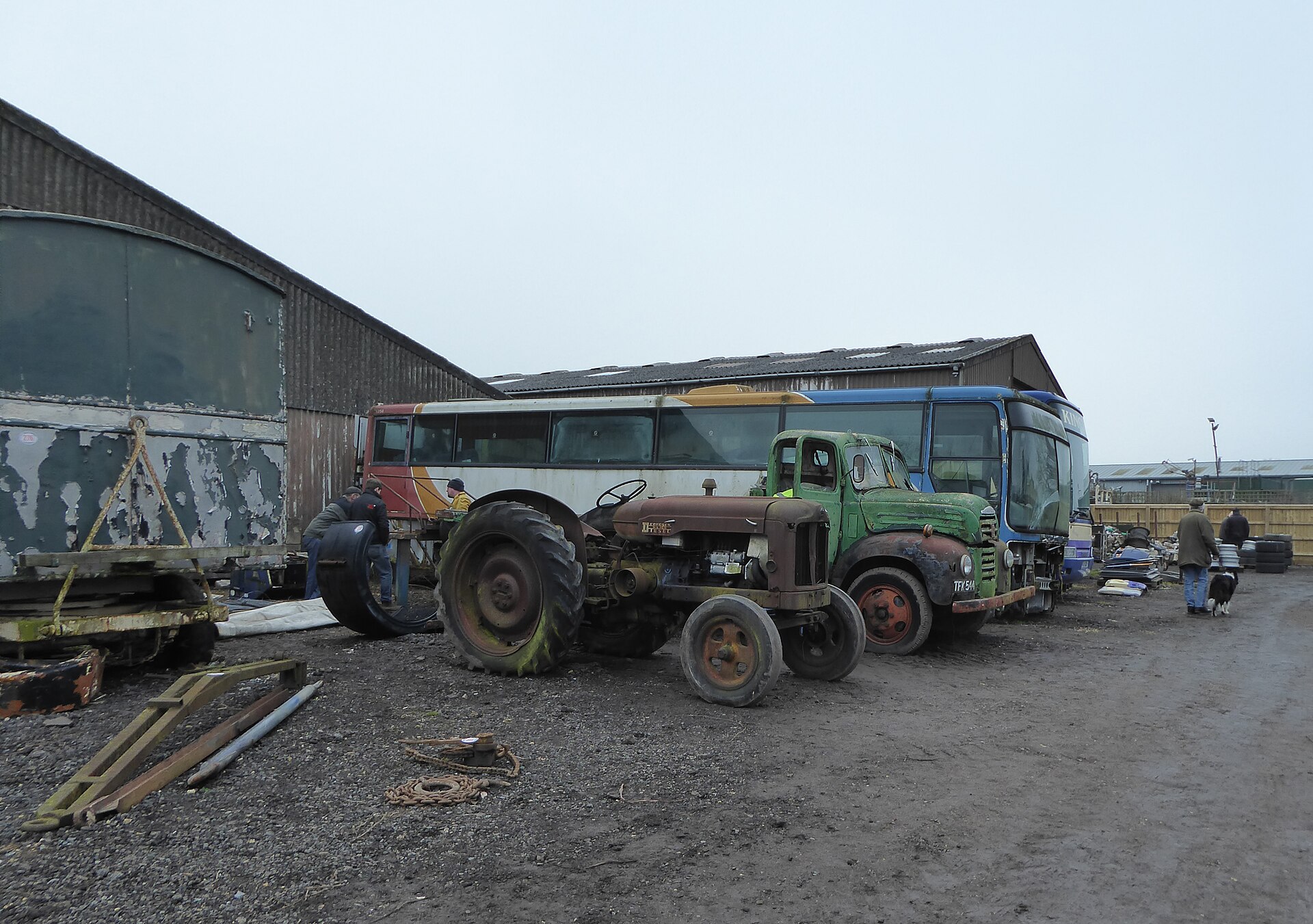
Viewing day: the best free day out in the vintage machinery world
There is a day, usually the day before a vintage auction, when several hundred tractors are laid out in rows across a field with lot numbers stuck to their bonnets, the ropes are down, and anybody can walk in. No ticket, no gate, no bidding. It is one of the great free days out in this hobby and almost nobody outside the trade thinks to mention it.
This guide covers how a UK vintage machinery auction actually works, what happens on viewing day, how to behave around the lots, and what changes if you decide you do want to put your hand up. Everything here is general practice rather than a promise about any one sale, so always check the auctioneer's own terms before you set off.
What a vintage sale actually is
A vintage sale is a collector auction, not a farm dispersal. The lots come from all over the country, consigned by collectors, estates and people finally admitting the barn needs clearing, and they run from a rusted seat pan through to a fully restored road-going traction engine.
The scale takes people by surprise the first time. Cheffins' Cambridge Vintage Sale at Sutton near Ely has run to around 3,500 lots in recent editions, several hundred of those vintage and classic tractors, which makes it the largest sale of its type in Europe. Their Harrogate Vintage Sale at the Great Yorkshire Showground has been going close to thirty years and is the biggest in the north, carrying over a thousand lots in recent years. A sale that size cannot be walked properly in an hour.
Viewing day is the day to go
On sale day the crowd follows the auctioneer down the rows and the machinery you want to look at is either behind you or an hour ahead of you. On viewing day the lots sit still and you have the field to yourself.
That is the day to bring the children, because a field of four hundred tractors with nobody hurrying you is a better afternoon than most paid attractions, and it costs nothing at most salegrounds. Check the auctioneer's terms first, as arrangements differ between houses and sales.
- Wear boots. Salegrounds are grass and hardcore, and by November they are mud.
- Take the catalogue or have it open on your phone. Lots are laid out in number order, which is the only way to navigate.
- Go early. Trade and serious buyers view first thing, and the light is better for photographs.
- Bring cash for the burger van and the catalogue; salegrounds are not always well served for card payments.
- Do not climb on anything, and keep children off the machinery. These are other people's lots and some are worth more than a car.
Reading a lot properly
Everything at a vintage sale is sold as seen. There is no warranty, no comeback and no getting your money back because it turned out the engine was seized. That is not a scandal, it is simply how auctions work, and it is why viewing day exists.
So look properly. Turn the engine over by hand if the auctioneer's terms allow it, check whether the tinwork is original or a rewrapped fabrication, look at the tyres, and take a view on how much of what you are seeing is paint. Ask the people standing nearby, because vintage machinery crowds are unusually generous with knowledge and most of them would rather you bought well.
If you decide to bid
You must register before you can bid, in the room or online, and most houses want identification and sometimes a deposit. Do that in advance rather than on the morning.
The hammer price is not the price. Buyer's premium is added on top, VAT may apply to the premium and sometimes to the lot, and the auctioneer's terms will spell out both. Work out your absolute maximum including those extras before the lot comes up, then stop there. Auction rooms are designed to make you spend one more bid.
Then think about how it gets home. A tractor that has not run since 1998 is not driving to Devon, and low-loader transport for a bought lot is a real cost that people routinely forget to budget for. Sort it before you bid, not after.
Timed online sales
More and more collection sales are sold as timed online auctions, where there is no live auctioneer and lots close one after another at set times while you bid from your kitchen table. Named single-owner collections are often sold this way.
The machinery still physically exists somewhere, and the auctioneer will normally set out viewing arrangements on the lot page. If you can get to the viewing, go, because bidding on a sixty year old tractor from photographs alone is how people end up disappointed.
What else is worth knowing
Automobilia sales are the quiet other half of this world. Enamel signs, petrol pump globes, garage memorabilia and motoring ephemera go through their own dedicated sales, and they are an easier way into collecting than a five figure tractor.
Plant sales are different again. Big on-site contractors plant auctions sell excavators, dumpers and rollers across multiple selling rings, and while they are trade events rather than collector days, the sight of a saleground full of yellow machinery has its own appeal if that is your thing.
Quick answers
Do you have to pay to attend a vintage auction?
Not usually. Viewing and attending are free at most machinery salegrounds, and you only need to register if you intend to bid. Check the auctioneer's terms before travelling, as arrangements vary between houses and sales.
What is buyer's premium?
A percentage the auction house adds to the hammer price, which is how they get paid. It varies by auctioneer and is set out in their terms, so always work out your maximum bid with the premium and any VAT included.
Can I take children to an auction viewing day?
Yes, and a field of several hundred tractors with nobody rushing you is a genuinely good afternoon for them. Keep them off the machinery, since every lot belongs to somebody else and some are extremely valuable.
Is everything sold as seen?
Yes. Vintage auction lots carry no warranty and there is no comeback if something turns out to be worse than it looked, which is exactly why viewing day matters. Inspect anything you are serious about in person.
How do I get a bought tractor home?
You arrange and pay for transport yourself, and it needs sorting before you bid rather than after. A non-running vintage tractor needs a low-loader or a trailer and a winch, and collection deadlines set by the auctioneer are usually tight.